Nearly every business owner asks some version of the same question eventually: why do we have thousands of followers and barely any sales to show for it? The honest answer, most of the time, is that follower count and actual business growth were never really the same thing. Strategic social media management is what closes that gap, and it’s rarely as flashy as people expect it to be.
Posting every day isn’t a strategy on its own. It’s just activity. And activity without a direction behind it is how a brand ends up with a good-looking Instagram grid and a sales pipeline that hasn’t budged in months.
1. Follower Count Was Never the Actual Target
It feels good watching that number climb, no argument there. But it doesn’t pay anyone’s bills, and that’s the part a lot of brands figure out too late. Strategic social media management flips the whole priority — instead of chasing a bigger number, you chase the specific people who’d actually buy something from you.
A page with five thousand genuinely engaged followers will beat one with fifty thousand disconnected ones, basically every time we’ve seen it tested — a pattern Sprout Social’s engagement research has also pointed to repeatedly, where reach without relevance rarely converts into actual revenue. The follower count was always just a side effect of doing the right things consistently. It was never supposed to be the goal itself.
2. What Strategic Social Media Management Actually Looks Like Day to Day
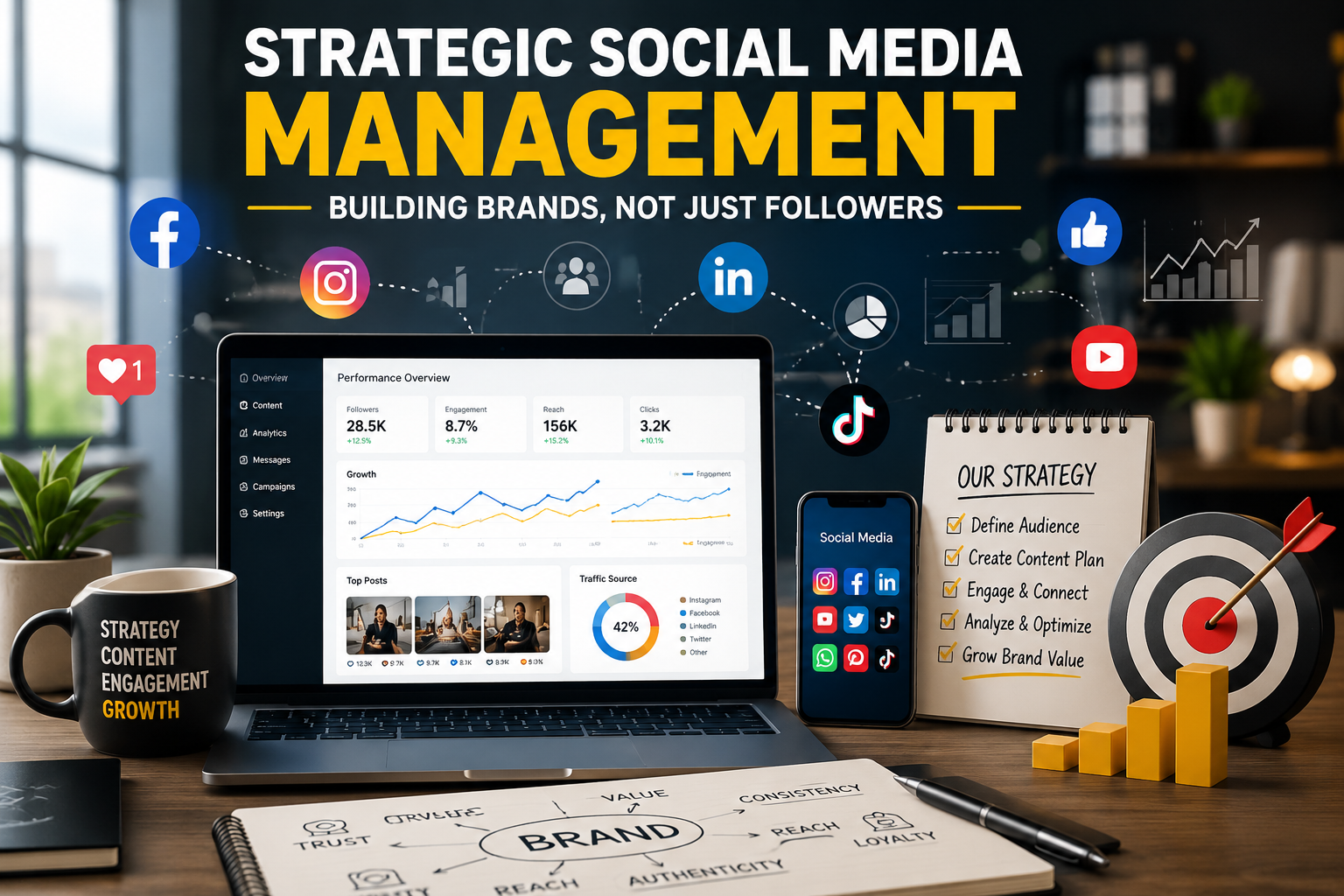
This is where a lot of explanations get too abstract, so let’s keep it grounded. Strategic social media management isn’t a pretty mood board or a content calendar full of nice-looking templates. It’s knowing exactly who you’re talking to instead of posting generically and hoping the right person happens to scroll past. It’s rotating between educating, building trust, and actually selling, instead of only ever pitching. It’s showing up reliably rather than betting everything on one lucky viral moment. And it’s treating each platform like its own thing — what works on a Reel rarely translates the same way to LinkedIn, and pretending otherwise wastes a lot of effort.
The whole point, at the end of the day, is turning a stranger scrolling past into someone who trusts your brand enough to actually message you.
3. Where a Digital Marketing Strategy Social Media Plan Usually Falls Apart
Most brands don’t struggle because they lack creative ideas. They struggle because their digital marketing strategy social media efforts live in separate boxes — one person handles Instagram, someone else runs the ads, and nobody’s really checking whether any of it connects back to actual revenue at the end of the month.
A digital marketing strategy social media plan that’s built properly ties all of it together. Organic posts warm people up, paid ads convert the warmest slice of that audience, and the reporting actually shows which specific post led to which enquiry. Skip that connection and social media just turns into noise — nice-looking noise, but noise all the same.
4. Why Businesses Eventually Bring In Top Social Media Consultants
There’s a reason growing brands stop handling this internally with “whoever has time” and start bringing in top social media consultants instead. It’s rarely about effort. It’s about pattern recognition — the kind you only get from managing accounts across dozens of industries and watching what quietly fails versus what actually works.
Top social media consultants have already seen the mistakes play out elsewhere. That’s genuinely hard to replace with trial and error on your own, especially when every failed post is also, quietly, a missed lead you’ll never get back.
5. The Part Everyone Forgets: Website Content Creation Services
Here’s something that gets missed constantly, and it’s a shame because it’s such an easy fix. Social media can absolutely spark interest. But if someone clicks through and lands on a website that’s thin, outdated, or just confusing, all that momentum dies right there on the page. That’s exactly why website content creation services matter just as much as the social strategy driving traffic to them.
Social gets someone to your door. The website content is what actually convinces them to walk in. Brands that invest properly in both tend to pull ahead of the ones treating social and website content as two unrelated projects run by two unrelated people.
6. A Quick Way to Tell If It’s Actually Working
Forget follower growth for a second and look at a different number instead — how many people are actually messaging, commenting with real questions, or clicking through to your website from a post. That’s usually a far more honest signal of whether strategic social media management is doing its job than raw reach ever will be.
A lot of brands panic when a post doesn’t perform, but one flat week rarely means much on its own. What matters more is the three-month trend — are enquiries slowly climbing, or has the account just gotten louder without actually getting more effective? That distinction is easy to miss if you’re only checking vanity numbers every morning.
How We Approach It at Digital Growth Technology
At Digital Growth Technology, strategic social media management is never just about hitting a posting schedule. We build it around your actual goals — content pillars, platform-specific execution, and a digital marketing strategy social media plan that actually connects organic reach to paid conversion, reporting back real numbers instead of vanity metrics that look nice in a screenshot.
If your social pages are getting attention but the sales aren’t following, that’s almost always a strategy problem, not an effort problem. Reach out to us and let’s build something that actually grows the brand, not just the follower count.