
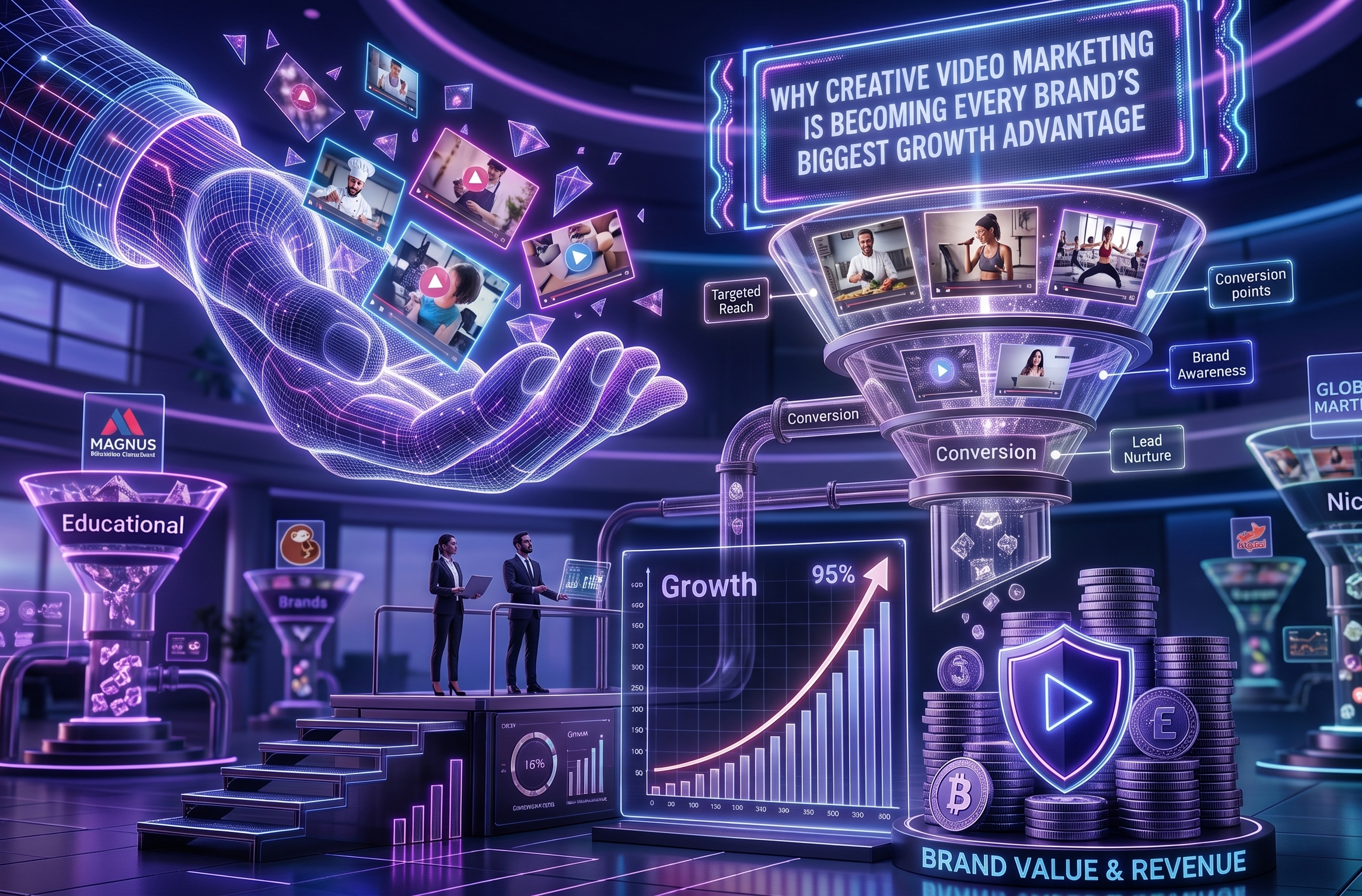
Scroll through your own Instagram for two minutes and notice what actually makes you stop. Nine times out of ten, it’s not a photo. It’s a video that grabbed you in the first second and didn’t let go. That’s creative video marketing doing its job, and whether brands admit it or not, it’s quietly become the thing separating who gets remembered from who gets skipped.
A lot of businesses still treat video as something extra — shoot one when there’s time, post it, move on. That’s backwards now, and honestly it’s costing more brands than they realise. Video isn’t the side dish anymore. For a growing number of businesses, it’s the whole meal.
1. Why Creative Video Marketing Wins Attention First, Every Time
There’s no mystery to this part, really. Video gives you motion, sound, and a face all at once, and a static post simply can’t compete with that combination. A photo asks someone to imagine your product doing something. A video just shows them, and the brain doesn’t have to work for it.
We’ve watched this play out with more than one client — a plain, unpolished 15-second clip with a decent hook regularly beats a beautifully designed graphic post. Not because the design was bad. Because movement wins the scroll war before design even gets a chance. It’s not just anecdotal either — Wyzowl’s video marketing research has repeatedly found that a large majority of businesses now consider video a core part of their strategy, precisely because it outperforms static content on almost every engagement metric that matters.
2. The Shift Nobody Really Announced
Nobody sent out a memo saying “content now means video.” It just happened, gradually, and then all at once. A few years back, a solid blog post or a well-shot photo grid was enough. Now people expect a brand to actually show up on camera, talk, react, move — and that shift is basically what video media marketing has quietly become, whether brands call it that or not.
A few things changed at the same time, and honestly it’s easy to miss how much they compound:
People trust what they can see moving more than what they read. Algorithms on Instagram, YouTube Shorts, and even LinkedIn now quietly favour video reach over static posts. And scroll speed keeps climbing every year, so if your hook isn’t landing in the first second, it’s already too late.
If your content library right now is mostly images, you’re basically fighting with one hand tied behind your back. It’s fixable, but it does mean rethinking where the effort goes
3. What Changes When You Bring in an Actual Video Marketing Agency India Brands Trust
Here’s a pattern we’ve seen more times than we can count. A business shoots something in-house, it looks fine, it gets posted, and then… nothing. Not because the concept was bad — usually because a random video and a strategic one aren’t the same animal at all.
A proper video marketing agency India businesses actually rely on doesn’t just point a phone and hit record. There’s a system underneath — the hook, the pacing, cuts made for the specific platform, captions that work with sound off, and paid promotion pushing it to people who’d actually care. Strip out any one of those and the video quietly underperforms, even if it looks great.
If there’s one thing worth fixing first, it’s this: stop treating video like a one-time task on a to-do list. Treat it like a repeatable loop — script, shoot, edit, push, repeat.
4. Doing It Yourself vs Hiring a Video Advertising Company India
A phone clip for a quick behind-the-scenes story? Totally fine, do it yourself. Running paid ads meant to convert cold strangers into customers? That’s a different game entirely, and it’s exactly where a video advertising company India brands lean on tends to earn its cost back.
The real difference isn’t camera quality. It’s knowing which cut works where — a 15-second version tested across three different hooks will almost always beat one long video posted once and forgotten about. That kind of pattern recognition only comes from running dozens of campaigns, which is hard to fake if you haven’t actually done it.
5. What It Costs to Wait
Nobody notices the damage in real time, and that’s exactly the problem. Every month a brand puts off creative video marketing, somebody else is quietly winning the attention that could’ve gone to them. No single missed video feels like a big deal on its own. Add twelve months of that up, though, and it’s the gap between a brand that grew and one that’s still exactly where it started.
You don’t need to go viral, by the way. Most brands never will, and that’s fine. What actually moves the needle is showing up consistently enough that people start recognising you — that’s a far more realistic goal, and it pays off slowly, in a way that compounds instead of spiking and disappearing.
6. What Small Businesses Get Wrong About Creative Video Marketing
There’s a common assumption that creative video marketing needs a big budget, a full crew, and a studio setup before it’s even worth attempting. That’s rarely true, and honestly, chasing production value too early is one of the more common mistakes we see. A shaky but honest 15-second clip filmed on a decent phone, with a clear hook and a real reason to watch, will usually beat a polished ad that took three weeks to plan and says nothing interesting in the first two seconds.
The businesses that get the most out of video aren’t necessarily the ones spending the most. They’re the ones treating it like a habit rather than an event — filming something small every week instead of waiting for the “perfect” concept before ever picking up a camera. Perfection is a good way to never post anything at all.
Where Digital Growth Technology Fits In
We’ve watched this shift happen up close at Digital Growth Technology, working across eCommerce, hospitality, and local service brands. Creative video marketing wasn’t something we chased because it was trendy — it became the backbone of what actually works, almost by default, once you see enough campaigns.
We handle it end to end: strategy, scripting, the actual filming, editing, and the paid push that gets it in front of the right people. If your brand’s still relying on static posts to carry the load a video should be carrying, that’s usually the quickest thing to fix — not a bigger budget, just a better format.
If you’re curious what a proper video strategy could look like for your business, get in touch with us and we’ll walk through it together.