
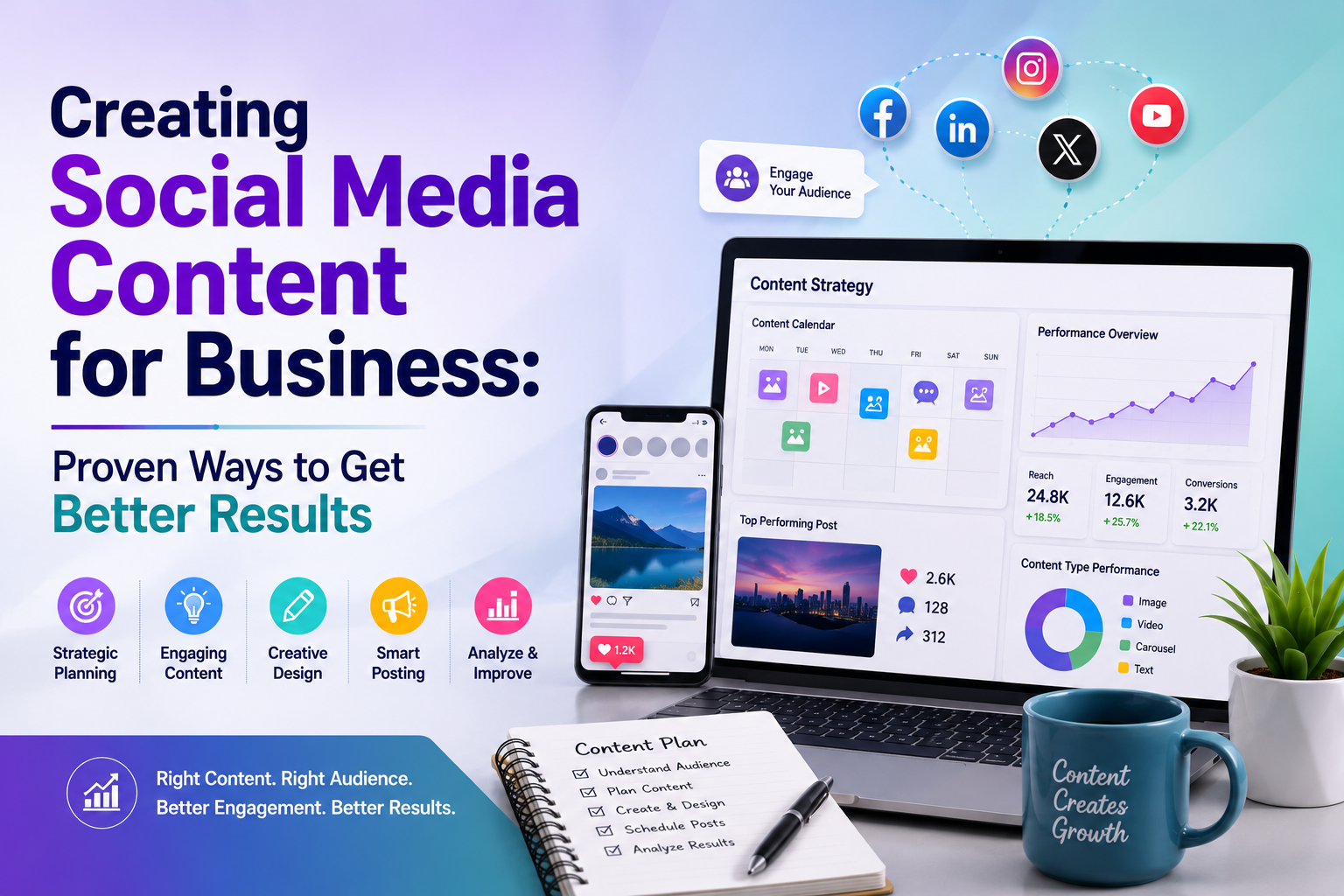
Plenty of businesses are posting consistently, hitting their calendar every single day, and still watching engagement sit flat month after month. It’s a strange, quietly demoralizing spot to be in — doing the work, showing up, and getting almost nothing back for it. Usually the issue isn’t effort. It’s that creating social media content for business got treated as a volume problem when it’s actually a relevance problem.
1. Posting Often Isn’t the Same as Posting Well In Creating Social Media Content for Business
A content calendar full of posts feels productive. It looks productive on a dashboard too. But posting for the sake of staying active tends to produce content that’s technically there and practically invisible — nobody’s saving it, nobody’s sharing it, and the algorithm notices that faster than most brands realize.
What actually moves the needle is content built around a specific reaction you want from a specific person, not content built to fill a Tuesday slot. That distinction sounds small on paper, but it changes almost every decision that follows — what to post, when to post it, and honestly, whether to post it at all.
2. What Good Business Content Is Actually Built Around
The strongest business content usually starts from a question a real customer has asked, out loud, at some point — not from a trends page. It solves something small and concrete, or it shows something real (a process, a result, a behind-the-scenes moment) rather than restating a value proposition in slightly different words each week.
A digital growth agency that’s done this for a while tends to build content around actual customer questions and behavior first, then layer trends on top — not the other way around. Trends can help a piece travel further once it’s already good. They rarely make a weak idea worth watching.
3. Why Platform-Native Content Outperforms Repurposed Content
Content built for one platform and copy-pasted everywhere else usually underperforms on all of them. A caption that works on LinkedIn reads stiff on Instagram. A vertical video shot for Reels looks cramped when it’s forced onto a horizontal feed. Platforms reward native behavior, and viewers can tell within a second or two when something wasn’t actually made for where they’re watching it.
This doesn’t mean rebuilding everything from scratch for every platform. It means adjusting format, pacing, and tone enough that it feels like it belongs — a shorter hook on TikTok, a more conversational caption on Instagram, a more direct, professional framing on LinkedIn. Small adjustments, but they compound.
4. The Role of Consistency Without Burning Out the Idea Well While Creating Social Media Content for Business
There’s a difference between showing up consistently and repeating the same idea until it stops landing. A lot of businesses find one format that performs — a talking-head video, a carousel template — and lean on it so heavily that audiences start scrolling past it out of sheer familiarity. Rotating formats while keeping the underlying message consistent tends to hold attention far longer than sticking to one format out of comfort.
5. Building This Into an Actual Digital Growth Strategy
Content that gets results rarely happens by accident, post to post. It comes from a broader digital growth strategy that ties content to a purpose — awareness, trust, or direct response — instead of treating every post like it needs to do all three at once. Trying to make one post accomplish everything usually means it accomplishes very little.
Deciding what each piece of content is actually for, before writing a single word of it, tends to be the step most businesses skip. It’s a quick step, but it changes the whole brief — a trust-building post and an awareness post shouldn’t look or read the same way, even if they’re going on the same feed the same week.
6. Why Feedback Loops Matter More Than the Content Itself
Even well-planned content needs a feedback loop to keep improving. Looking at what actually got saved, shared, or commented on — and being honest about what didn’t — is usually more valuable than any single piece of advice about what to post next. Businesses that review this monthly tend to get sharper over time. Businesses that post and move on without looking back tend to plateau at whatever level they started at.
7. A Simple Gut Check Before You Post
Ask one question before publishing: would this stop someone mid-scroll, or would it blend into everything around it? If the honest answer is “it would blend in,” that’s usually worth fixing before it goes out, not after it quietly underperforms.
How Digital Growth Technology Approaches This
At Digital Growth Technology, creating social media content for business starts with understanding what a specific audience actually stops for, not with filling a calendar. We build content around real behavior and real questions, so it earns attention instead of just occupying a slot.
If your posting is consistent but the results aren’t following, reach out to us and let’s figure out what’s actually missing.