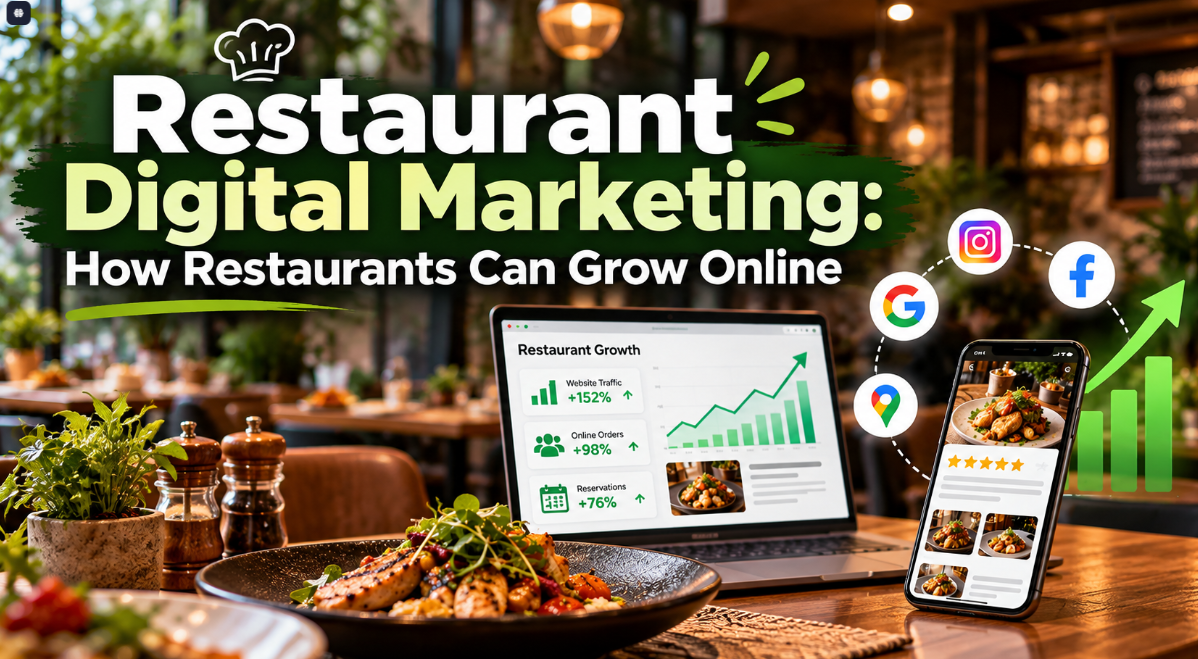
Say you run a small dhaba on a busy road. Regulars love you. Then a new place opens two streets away with a bright Instagram page and 400 Google reviews, and your evenings slow down. Same food quality, maybe better. So what changed?
People started checking phones before choosing where to eat. That’s the whole story, and it’s why restaurant digital marketing has stopped being optional.
1. Your online page is the first visit
Before anyone walks in, they’ve already “visited” you on a screen. They looked at your photos, skimmed a few reviews, maybe checked your last post. If your restaurant online presence looks abandoned, with old pictures and unanswered questions, they quietly decide you’re the same inside. It’s unfair, but it’s how people behave.
2. Fix the boring stuff before anything else
Open Google, Zomato and Instagram side by side. Is your name written the same way on all three? Same phone number? Same timings? Usually not. One says “Sharma Dhaba,” another says “Sharma’s Dhaba & Family Restaurant,” and the third has a number you stopped using two years ago. Search engines get confused, and customers get frustrated. Clean this up first. It costs nothing and it holds everything else together.
3. Take Google Business Profile for restaurants seriously
If you take only one thing from this article, take this. Google Business Profile for restaurants is free, and it’s often the first thing people see about you. Yet plenty of owners set it up once and never touch it again.
Pick the right categories. Upload new photos every few weeks. List your best-selling dishes. Answer the questions people leave, because an unanswered question looks careless. Post offers and events. Think of it as a shop window that stays lit after you close.
4. Post like a person, not a brand
“We are delighted to announce our new menu” sounds like a bank. Nobody talks that way. Try showing the morning prep instead. Introduce the cook who makes the best chutney. Share a birthday celebration, with the family’s permission. Three rough, honest posts a week beat one polished post a month, every time.
5. Don’t try to be everywhere
Pick one or two platforms. For most restaurants, that’s Instagram, plus Facebook if your customers are older. Do those properly and reply to comments and messages within a few hours. A restaurant that answers feels trustworthy, and trust is what tips the decision when two places look the same.
6. Keep your website simple
Menu, address, timings, a few good photos, and a button to call or book. Make sure it loads fast on a phone, since that’s where almost everyone will open it. A plain site that loads in two seconds beats a beautiful one that takes ten.
7. Look at the numbers once a month
You don’t need fancy dashboards. Check three things: calls from your profile, visits to your website, and which posts got saved or shared. Do more of what worked, drop what didn’t. That habit alone turns random effort into restaurant digital marketing that improves with time.
A routine you can actually keep
Monday, refresh photos or the profile. Wednesday, post a short video. Friday, reply to every review and message from the week. Sunday, spend five minutes looking at the numbers. That’s under two hours a week.
Mistakes that keep showing up
Posting only discounts, so the page reads like a flyer. Ignoring bad reviews. Changing the plan every two weeks because results haven’t arrived. Going quiet after a busy festival season. None of these are hard to avoid. They just need someone paying attention.
When it gets too much
When the restaurant digital marketing is full, marketing is the first thing to slip. That’s normal. A reliable digital growth agency can take over the repetitive work like listings, posting, replies and reports while you stay on the floor. Look for one that explains things in plain language and shows you real numbers, not vague promises.
How Digital Growth Technology helps
At Digital Growth Technology, we build restaurant digital marketing around what actually fills tables: strong local visibility, honest reputation building and steady content. No jargon, no inflated promises.
If your online presence doesn’t match how good your food really is, reach out to us and we’ll show you where to start.