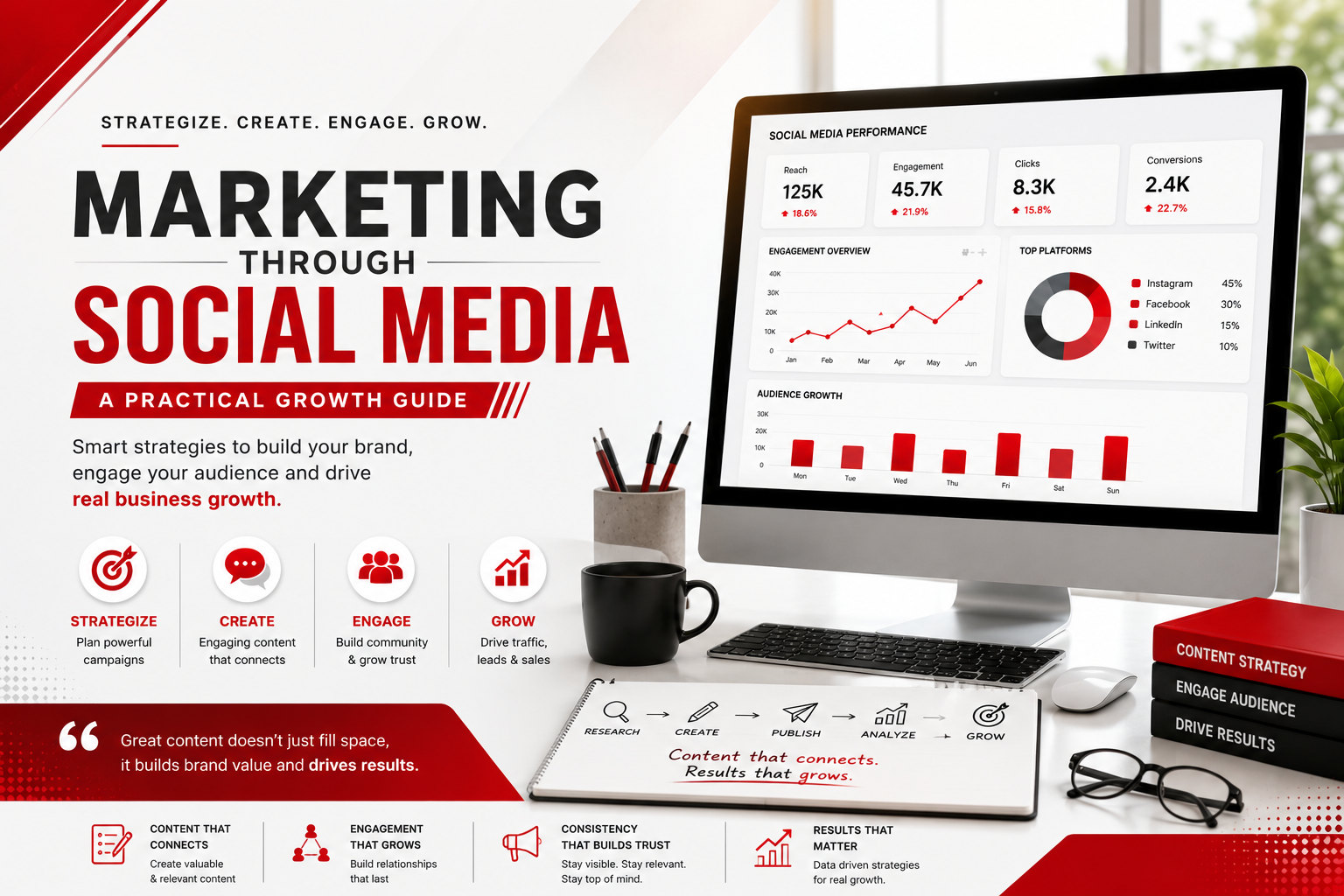
Everyone tells you to “be active on social media.” Almost nobody tells you what that’s supposed to mean once you actually sit down to do it, or why some brands turn all that posting into real revenue while others just end up with a pile of likes going nowhere in particular. Marketing through social media only really works once you stop treating it as a habit you’re supposed to keep up and start treating it like a system with a purpose.
And this isn’t a “post more” problem. If anything, a lot of brands would do better posting less and spending that saved time figuring out what each post is actually for.
1. Why Most Businesses Start This Backwards
The typical order of operations goes: pick a platform, start posting, see what sticks. Honestly, that’s backwards. You’re better off starting with the actual business goal — more leads, better brand recall, more direct sales, whatever it is — and building the content around that. Posting first and hoping a goal shows up later rarely works out the way people expect.
Without a goal attached, marketing through social media tends to generate plenty of activity and not much movement in the numbers anyone actually cares about. A brand can post daily for months and still not be able to say, with a straight face, what any of it did for the business.
That’s usually the moment a business owner starts asking whether the problem is the platform, the content, or just the lack of a plan behind either.
2. How Social Network in Marketing Has Actually Changed
The role social network in marketing plays now looks pretty different from even a couple of years ago. HubSpot’s social media research has pointed to relevance and watch time carrying a lot more weight than sheer posting frequency across most platforms these days — and that shift has quietly changed what earns reach in the first place.
It’s a big part of why “just post three times a week” doesn’t hold up as advice anymore, not without something behind those three posts explaining why they exist. Platforms are getting better at recognising filler content, and audiences are getting quicker at scrolling past it.
3. What Real Social Media Marketing Services Should Include
Say “social media marketing services” out loud and most people picture a scheduling calendar. That’s a sliver of it, really. Proper service covers strategy, content creation, community management, paid promotion, and reporting — and those pieces need to actually work together, not sit around as separate tasks handled by people who never talk to each other.
Get that coordination right and organic content does the work of warming an audience up, while paid budget goes toward converting the warmest slice of it. Split those apart and you’re basically running two efforts that happen to share a logo.
A quick way to check if your current setup is disconnected: ask whether the person running your ads has ever actually read the comments on your organic posts. If the answer’s no, there’s a good chance the two sides aren’t talking.
4. Picking Between Doing It Yourself and Hiring a Social Media Marketing Agency
DIY works fine at small scale — early on, when there’s not that much to manage. But once posting, ads, community management, and reporting all need attention at the same time, most business owners find themselves stretched thin pretty quickly. That’s usually around when a social media marketing agency starts making more sense than pushing through solo.
There’s no clean rule for exactly when to switch. But if social media is eating into time that should be going toward actually running the business, that’s a fairly reliable sign. Another one: if your last few posts went up without anyone checking whether they tie back to a goal, that’s worth noticing too.
5. Why Local Context Changes What Actually Works
Marketing through social media doesn’t look the same everywhere, and pretending otherwise shows. Providers offering digital marketing services in india who genuinely understand regional language, festivals, and local buying habits tend to produce content that lands better than anything built off a generic global template.
That holds true even for brands with a national audience. Local nuance still decides which posts get attention and which get scrolled past without a second thought. A festival greeting that actually reads as local — not translated word-for-word — tends to get noticed for the right reasons.
6. The Metric Most Businesses Should Actually Be Watching
Follower count gets most of the attention, but it’s rarely the number that predicts revenue. Sprout Social’s research on social media metrics backs this up too — enquiries, link clicks, and message replies tell a far more honest story about whether the strategy is working, even during stretches when the follower graph barely moves.
A smaller, genuinely engaged audience that converts consistently will outperform a bigger, disconnected one almost every time this actually gets tested. It’s not the most exciting metric to report on, but it’s usually the one that matters to whoever’s signing off on the budget.
7. A Simple Starting Point If You’re Not Sure Where to Begin
Pick one platform where your customers already spend their time. Set one specific goal for the next 90 days. Build content around that single goal before even thinking about spreading across five platforms at once. Trying to do everything simultaneously is usually how brands end up doing all of it poorly.
How Digital Growth Technology Approaches This
At Digital Growth Technology, marketing through social media starts with an actual business goal, not a content calendar copied from somewhere else. We tie organic and paid work together so growth doesn’t hinge on guesswork or whatever’s trending that particular week.
If your current approach feels like activity without direction, reach out to us and let’s build something with a real plan behind it.